Equipment optimization
Upgrading the equipment that handles, treats and doses your bulk products — without replacing everything. We extend the useful life of your assets and improve their output.
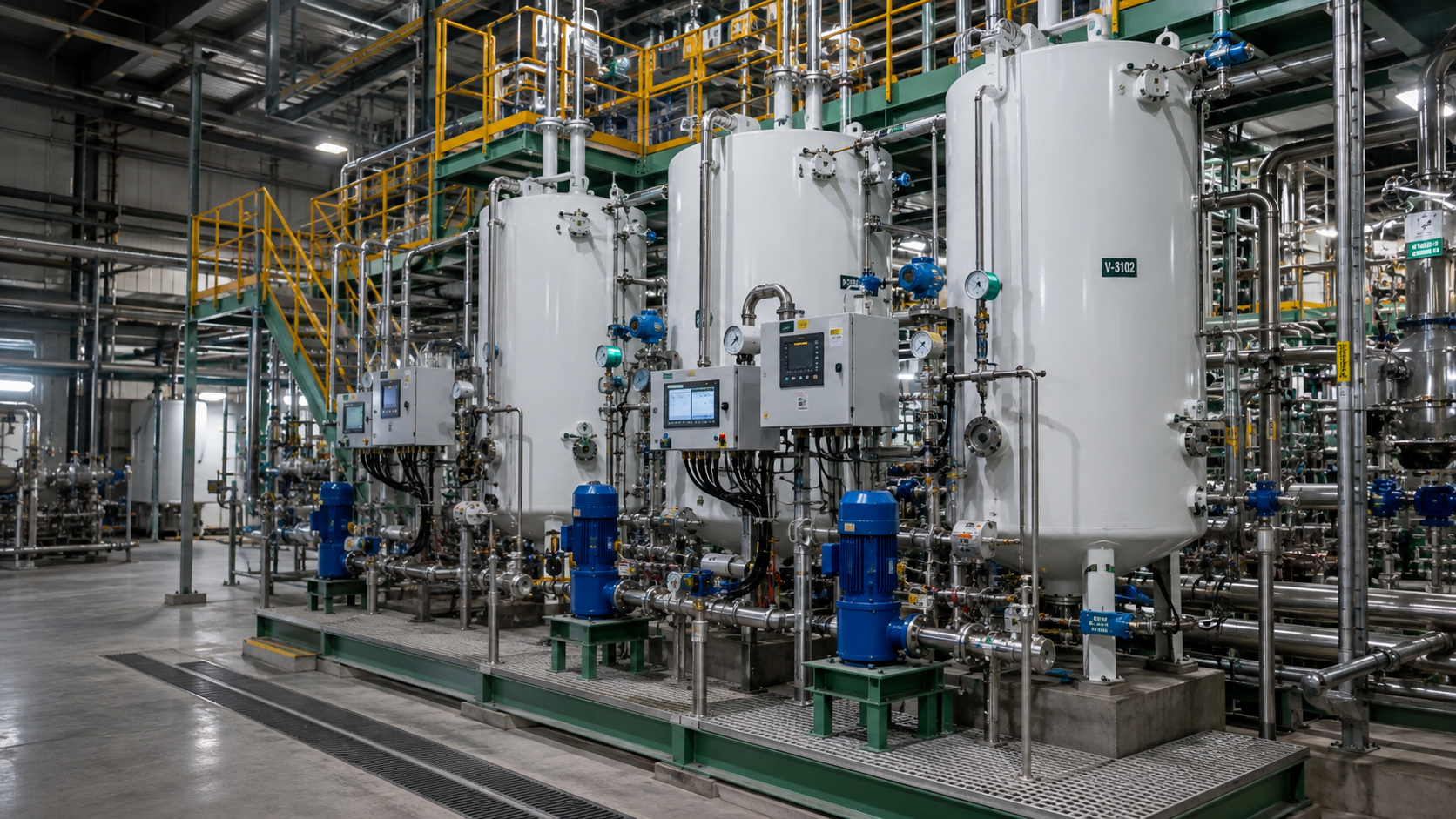
What our work includes:
Performance diagnosis
Assessment of the current condition and output of your equipment.
Process performance optimization
Drawing on your production data, we pinpoint bottlenecks and fine-tune sequences, setpoints and cycle times to get more out of your existing equipment.
Retrofit and upgrade
Targeted replacement of aging components with current technologies.
Integration of new technologies
Modern sensors, drives and controllers added to your existing setup.
Reduced downtime
Better reliability, fewer breakdowns and less downtime.
Equipment optimization in practice
Get more from your existing assets before considering replacing them.
Upgraded equipment
Aging control components replaced with current, supported technologies.
Added instrumentation
Sensors and variable-frequency drives added to your existing equipment, without a full replacement.
Optimized sequences and interfaces
Sequences, recipes and alarms tuned; operator interfaces clarified.
Related projects
See all projects →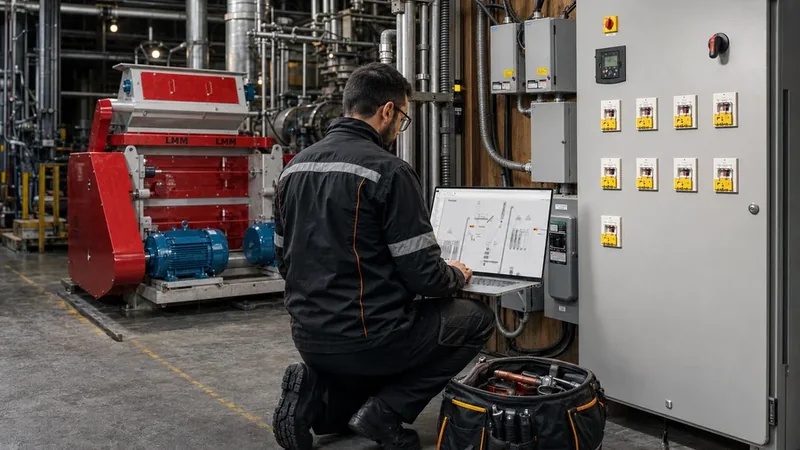
Automated grinding and roller mill
Situation — The grinder and the roller mill ran in manual mode, on separate starters.
What NIVEK did — We redesigned the electrical room and the control system: sensors added, programming and commissioning. A “keep full” mode holds the silos full from grind level setpoints — normal and critical. When the particle size changes, the adjustment stays manual, so the system asks the operator to confirm it has been made.
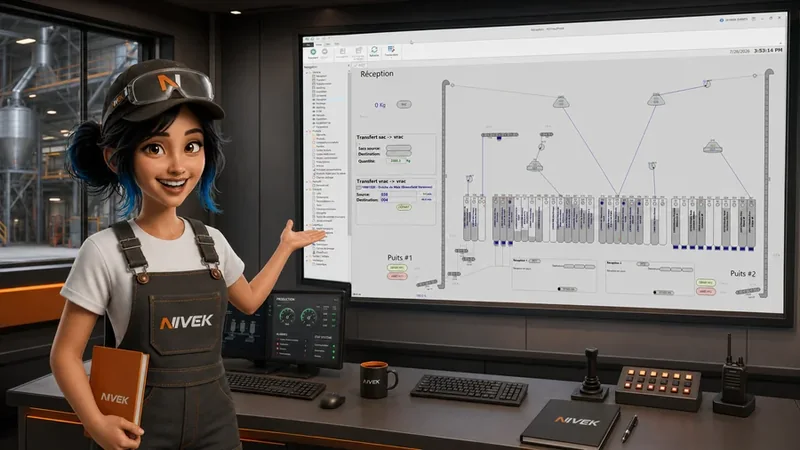
Automated two-pit receiving
Situation — Receiving ran entirely in manual mode.
What NIVEK did — We automated all of it: two receiving pits, bulk-to-bulk transfers and debagging — from bags to bulk.
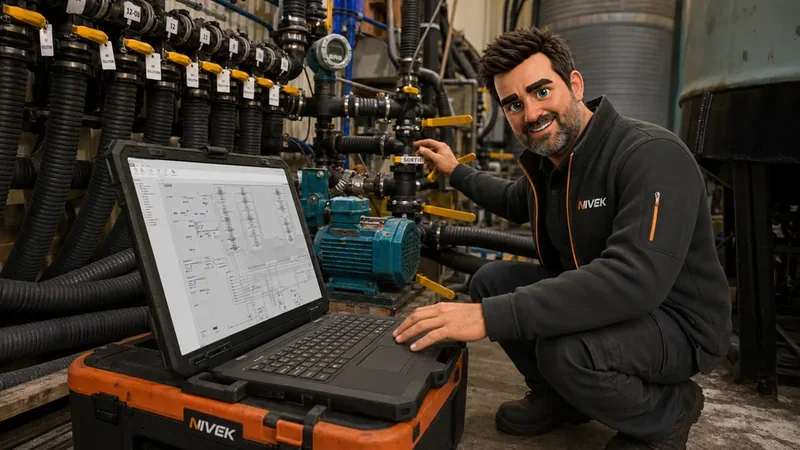
Automated liquid fertilizer plant
What NIVEK did — We automated the whole plant:
- 4 receiving stations, 3 mixers
- 2 truck loading stations, 1 tote filling station
- Solid products blended into the liquid mixes
- 31 storage silos, 189 valves
The system computes the best route for each product and prevents any contamination between incompatible products. Mixing times are driven by each product's parameters.
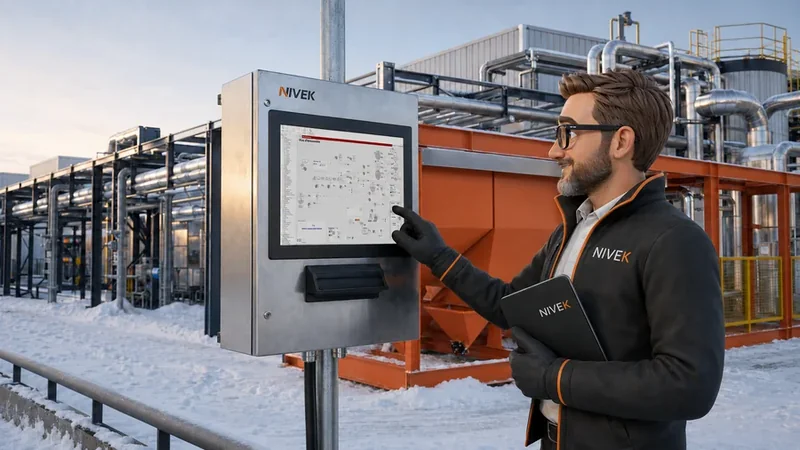
Automated bitumen polymerization plant
What NIVEK did — We automated the whole plant:
- Rail and truck receiving, storage and warehousing
- Continuous dosing for polymerization
- 2 “blend to truck” shipping bays: the recipe is dosed straight into the truck, with every product starting and finishing at the same time
- Advanced recipe management
- Standalone scale: prints shipping tickets and certificates of compliance
Small technical problems come up during our peak periods, and NIVEK has always been able to solve them.
NIVEK commissioned our bagging unit and configured all the equipment.
custom smart factories.
Support in 3 phases
— without slowing the season.
A single expertise for automating your bulk processes end to end. From the initial audit to post-start-up follow-up, we're with you at every step.
Preparing the ground
- Audit of current processes
- Identifying pain points
- Defining concrete, measurable objectives
- Change management: we listen to operators' concerns, with a communication plan for the field team
Deploying without disruption
- On-site operator training
- Assisted start-up in real production
- Real-time adjustments
- Continuous technical support
Maintain and optimize
- KPI tracking after start-up
- Optimization of parameters and sequences
- Documentation updated after each intervention
- Ongoing assistance, maintenance and enhancements
Does one of these already speak to you?
The easiest way is to talk it over
for 30 minutes with our team:
we map your processes before proposing anything.